Clean before and after use.
Use lukewarm water and a mild, suitable cleanser when the product instructions allow it.
Care Guide
A little care goes a long way
Good care does not need to be complicated. A few simple habits can help intimate products stay clean, comfortable and in good condition for longer.
Different materials need slightly different treatment — and “waterproof” does not always mean “take it swimming.”
This guide gives you a calm place to start.
When the care instructions supplied with your product differ from general guidance, the product instructions always come first.
The Quick Care Guide
Six little habits cover most of the basics.
Use lukewarm water and a mild, suitable cleanser when the product instructions allow it.
Silicone, glass, metal, hard plastics and softer materials do not all ask for the same kind of care.
Splash-resistant and suitable for immersion are two very different things.
Give seams, textured areas and charging contacts a little extra attention.
Clean, dry and away from direct sunlight. Separate storage is a good habit for softer materials.
Your product knows itself better than any general guide ever can.
Material Guide
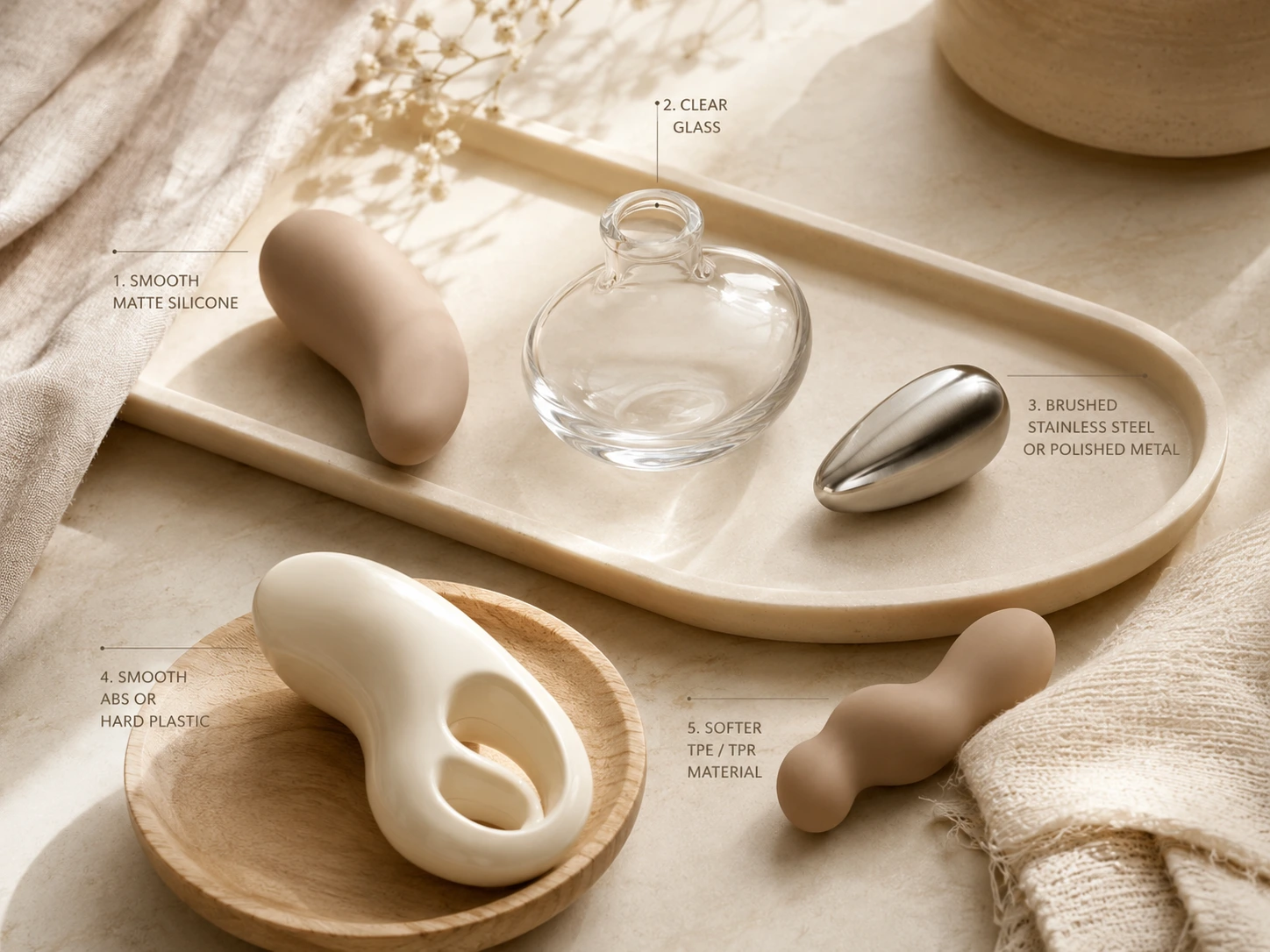
Start by checking what your product is made from. That one detail tells you a surprising amount about how to look after it.
Quality silicone has a smooth, non-porous surface and is generally straightforward to clean.
Warm water and mild soap or a suitable toy cleaner are common choices when the product allows washing.
Electronic parts, seams and charging ports still determine how much water is safe.
Properly finished borosilicate glass is smooth and non-porous.
Wash carefully and inspect the surface occasionally for chips, cracks or damage.
Avoid sudden extreme temperature changes unless the manufacturer specifically approves them.
High-quality stainless steel is durable, smooth and non-porous.
Mild soap and warm water are often enough for non-electronic pieces.
Coatings, plating and electronics may need different treatment — check first.
Hard plastic is often used for housings, handles and electronic products.
The surface may be easy to clean, but joints and electronics determine whether rinsing or only wiping is suitable.
Softer materials can require a little more attention and may be more porous than silicone.
Clean them thoroughly, let them dry completely and store them separately when recommended.
Tap or click to view full size.
A useful default: water-based lubricant is usually the easiest companion for intimate products. For silicone, hybrid or oil-based lubricants, check compatibility with the specific product first.
Water & IP Ratings
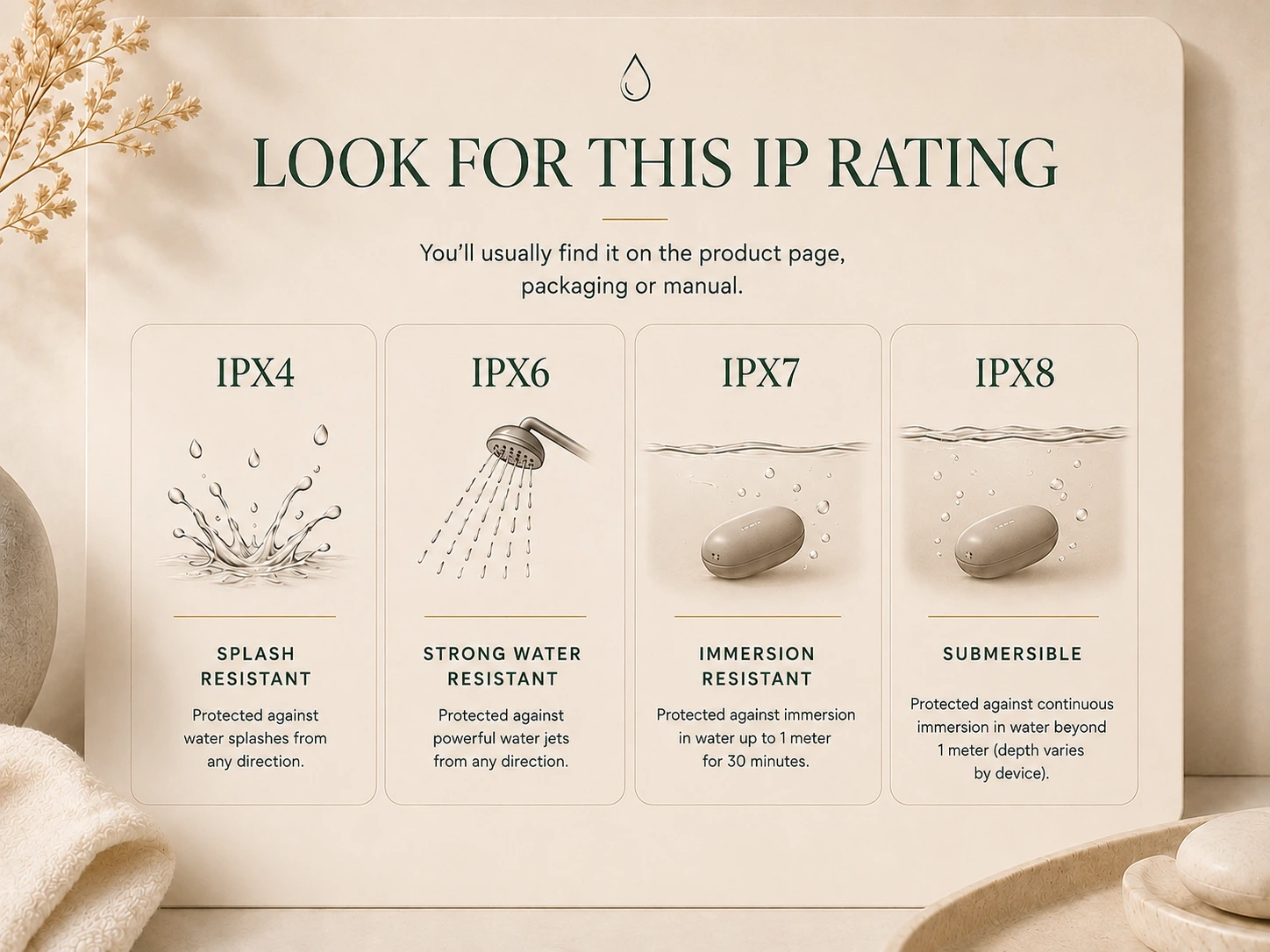
Words such as “water-resistant” and “waterproof” can sound reassuring, but the useful question is: what kind of water exposure was the product actually designed to handle?
An IP rating describes how an enclosure is protected against things getting inside it. The second number refers to water protection.
When an X appears — for example IPX7 — it simply means that a solid-particle rating is not being stated in that position.
Tap or click to view full size.
Before inviting your favourite massager into the bath, check whether the manufacturer invited it too.
If immersion is not clearly permitted, the safest place for an electronic product is beside the bath rather than inside it.
Cleaning & Drying
Good cleaning is thorough, not aggressive.
When permitted, use lukewarm water with mild soap or a cleaner suitable for the material.
Textures, grooves, seams and removable pieces deserve a little extra attention.
Remove cleanser residue carefully wherever the product can safely be rinsed.
Allow the product to dry completely before storing or charging it.
Strong solvents, alcohol, acetone, bleach and abrasive cleaners should not become surprise guests at the selfcare party. Use them only when the product manufacturer specifically says they are suitable.
Lingerie & Delicates
Lace, mesh, elastic fabrics and decorative details can stay beautiful for longer with a little gentler care.
The garment’s care label always comes first. Different fabrics, elastics and decorative details may need different treatment.
Cool or lukewarm water and a mild detergent are the safest starting point for particularly delicate lingerie.
When machine washing is permitted, use a delicate cycle, keep the temperature low and place lingerie in a mesh bag. Fasten hooks before washing.
Decorative hardware deserves extra care. Remove detachable chains or jewellery before washing when the manufacturer recommends it, and avoid rubbing, wringing or soaking delicate pieces.
Heat can be hard on elastic fibres and delicate fabrics. Air-drying is usually kinder than the tumble dryer.
If it looks like it could start a small argument with the washing machine, hand-wash it.
Storage
Store products somewhere clean and dry, away from direct sunlight and excessive heat.
Pouches and individual storage bags are useful for keeping dust away and preventing different soft materials from resting against one another for long periods.
A little personal space can be healthy for toys too.
Charging
Let rechargeable products and their charging contacts dry completely before connecting them to power.
Use the charger or charging method recommended by the manufacturer and keep charging equipment away from water.
Electricity appreciates boundaries too.
Care is part of the ritual
Looking after the things you use for selfcare does not need to become another task on your list.
Know the material. Follow the product. Keep it simple.