Silicone
Quality silicone can provide a smooth, flexible and non-porous surface.
Construction, electronics and lubricant compatibility still depend on the individual product.
Ingredients & Materials
Know what touches you
Materials and ingredients can affect how a product feels, how it should be cared for, what it works well with and whether it is suitable for you.
We want that information to be useful, not buried beneath frightening ingredient names or vague promises.
Familiar does not automatically mean better. Unfamiliar does not automatically mean bad.
Materials
Knowing the material is often the first useful step in understanding an intimate product.
Tap or click to view full size.
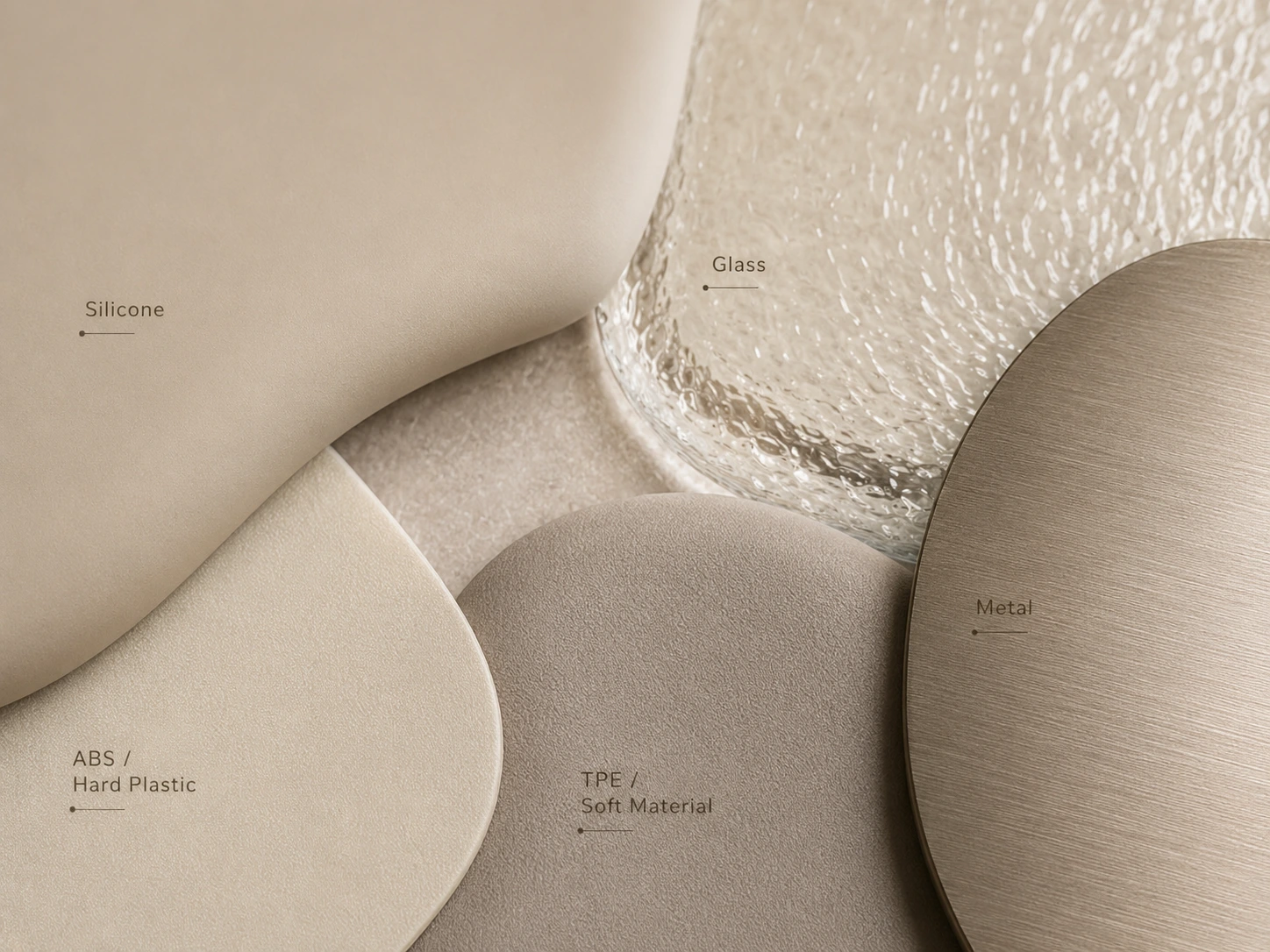
Quality silicone can provide a smooth, flexible and non-porous surface.
Construction, electronics and lubricant compatibility still depend on the individual product.
Properly finished borosilicate glass can provide a smooth, non-porous surface.
Always inspect glass products for damage and follow the manufacturer’s instructions.
High-quality stainless steel is durable, smooth and non-porous.
Coatings, plating and mixed-material construction may need different care.
Hard plastics are often used for housings, handles and electronic components.
Joints, coatings and electronics matter just as much as the visible outer surface.
Softer materials can offer flexibility and a different tactile feel.
Their composition and porosity can vary, so product-specific information matters.
Sensitivities
Natural rubber latex can cause allergic reactions in people who are sensitive or allergic to it.
If you know you have a latex allergy, check product materials carefully and choose a suitable latex-free alternative.
Allergies & sensitivities
An ingredient or material that works perfectly well for one person may not suit another.
If you already know that you react to a particular material, fragrance or ingredient, check the product information before use.
Lubricants
Water-based, silicone-based and oil-based lubricants behave differently and are not equally suitable for every material or product.
Water-based lubricant is often the simplest starting point for intimate products, while other formulas may require a closer look at compatibility.
When product and lubricant meet, introductions matter. Check compatibility first.
Body products & fragrance
Cosmetics, body products and fragranced products can contain long ingredient lists.
A long or unfamiliar name is not, by itself, evidence that an ingredient is harmful.
Ingredient information is most useful when it helps you identify something relevant to your own needs or known sensitivities.
Natural, synthetic & everything between
“Natural” can describe where something comes from. It does not tell you everything about safety, suitability, quality or sustainability.
Synthetic ingredients are not automatically undesirable either. What matters is the substance, how it is used, the amount involved and whether the finished product is suitable for its purpose.
We would rather understand an ingredient than judge it by the length of its name.
Product claims
Terms such as material claims, ingredient claims and environmental claims should mean something more than good packaging copy.
When MAGCOCOS highlights a specific product characteristic, we want it to be supported by useful information from the manufacturer or supplier.
Know it. Then care for it.
Once you know what a product is made from, the next question is how to look after it.
Explore the Care GuideThe useful version
You do not need a chemistry degree to make a thoughtful choice.
You need clear information, a little context and enough room to decide for yourself.
The periodic table may remain where it is. We promise not to make you memorise it.